Crip Rest
Rest as a reward for labour is a broken model

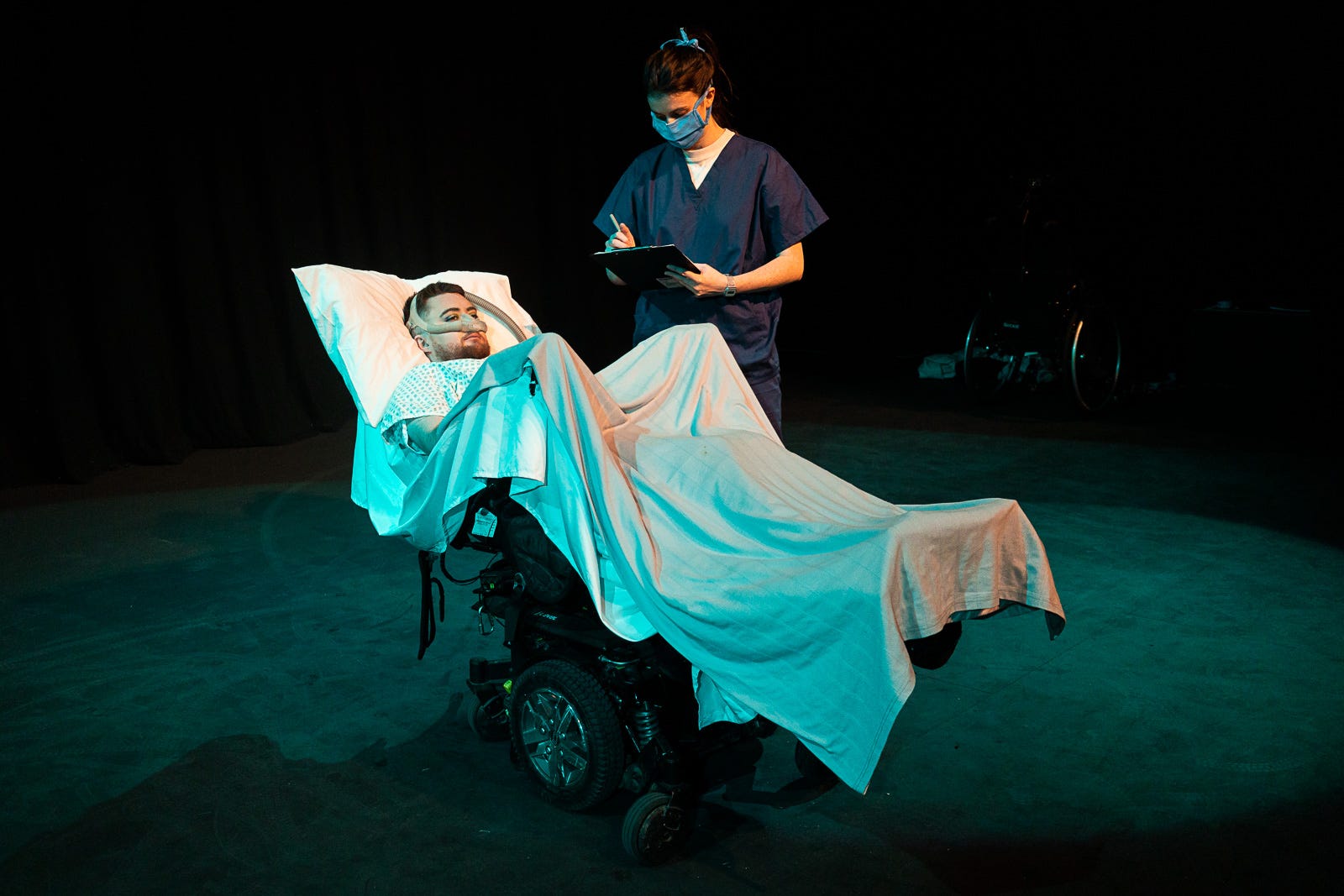
In the current Western conception of wellness, there has been an increased understanding of the importance of rest.
However, this understanding often frames rest in specific ways. Rest as a reward for working hard. Rest to allow us to recover from hard work. Rest as preparation to do even more. We are allowed to rest only for as long as it relates to productivity, or as long as that rest gets us to the point where we can go back into the ‘hamster wheel’.
Underneath all of this is a Protestant work ethic that believes in worthiness through output and value through contribution to society, where rest is seen as non-contributive. This framework around rest is neither neutral nor comfortable. It is a framework built around a very particular kind of non-disabled body with a very particular relationship to time and rest that most disabled people do not have.
Rest and recuperation
These assumptions around rest assume that we will recover by resting; that by taking the downtime to rest, we will return to a baseline and be ready to go again (productive, ready, and refreshed).
But for many of us, that isn’t our bodies and minds. Rest doesn’t restore us in the way that we expect it to. We are already depleted at the outset. It gives the recommendation that we just ‘try’ resting a certain brutality, a certain sharpness. People recommend that you take a break, sit down, or have a rest as if it were a simple answer, as if your body worked the way theirs did, and as if that would necessarily help the state of exhaustion you are in. Even though it’s meant well and may be very beneficial to some people, to others it’s a reminder that rest isn’t neutral, isn’t easy, and isn’t accessible for us. As disabled people, we have to earn rest twice: firstly by being productively unwell enough to qualify to be allowed to rest, and then by performing recovery correctly once we have rested to demonstrate we took full advantage of the rest we were generously allowed to take.
Surveillance and rest
Disabled people experience life under constant surveillance, both from the systems that control us, and from the people around us constantly judging whether we are working hard enough, whether we are disabled enough, and what it means. If we rest too visibly, we are seen as not trying hard enough to work, not trying hard enough to succeed. Therefore, we have to keep going even when we’re drained, because stopping and resting ends up being seen as a process of giving up to people who go on to question our capacity and suitability to work. The idea of admitting we need rest in front of those employers we depend on is terrifying, but also not resting has consequences we don’t want to bear. It’s an impossible double bind: we’re told to rest and then we’re penalised for being seen to rest, seen as weak, uncommitted, undeserving.
The hidden cost of rest
And for people living with degenerative, uncertain, and unpredictable conditions, rest also carries a cost, one that wellness culture doesn’t acknowledge. That cost is the things that we weren’t able to make, see, and do while we were resting, and the fear that we might not get another chance to do them. Many disabled people go full speed, not necessarily out of a desire to operate at that intensity, but out of a rational response to uncertainty, because we make a different set of calculations about what actually matters and when it matters. There is a tension between what our bodies need now and what we feel we need to have done before we can’t. This can make rest feel difficult to access, distant.
It becomes an impossible ask. How do I both rest more, but also fight for my rights, manage my care, and keep working, because otherwise the work might not be there when I return? How do I create now because later isn’t guaranteed, and yet that means creating in a burnt-out state of exhaustion? When people tell me to slow down, it can feel like I’m being asked to give up, particularly when it comes from people who don’t share my timeline. There’s a real tension in holding both things at once: the genuine need for rest, but also the genuine cost of it.
Reimagining rest
As I write this, I realise that I don’t actually know what rest is for me. An absence of activity doesn’t work; it leaves me jittery, edgy, and desperate.
So maybe rest is something more negotiated, conditional, and specific. Perhaps resting is working, but at a different pace or on different work. Perhaps it’s about finding rest on my terms, versus the expectation of others that I will go and lie down in a dark room and somehow come out cured of tiredness.
Actually, resting is about what replenishes you and doesn’t necessarily require you to stop. I want to reject the demand to be productive as a condition of worthiness to exist in the world. I want to embrace a radical case for rest that pushes back against those expectations. I also want to hold that alongside the complexity of the idea that sometimes not resting is a political act. Sometimes not resting reflects a refusal of the timelines that have been set for me. Being told that I need to take a rest, but recognising for myself that I can’t afford to rest and sustain my sanity, my identity, my work, or my reputation.
If the world allowed a more expansive understanding of rest, maybe we could all find ways to replenish ourselves without necessarily being tied to models of lying in bed resting quietly in the dark - something I often need, but not always. Maybe we could go out in nature and experience art and call this resting, and maybe we could be able to rest without pressure to do so, and without an expectation of recovery from doing so. But that’s not the world we live in, and trying to find a balance between the possibilities of resting and the need to keep going feels like a tightrope I will always have to cross.
Structurally, reimagining rest would require truly, fully flexible jobs, with employers that recognised and funded the value of that rest. It would need an understanding of how many different ways rest presented itself, and a loss of the idea that rest is a reward for work and a replenishment for work - when it should be taken as a part of the lives and the worlds we live in. So I am trying to learn to rest in the ways I need, when I need, and speak of that with no shame, no need to prove myself, and no need to perform either illness or wellness, only to meet my own needs.
This is great 👍🏻