Crip Work
Next time you look at a disabled person and think we might be lazy or slow, stop and consider the unpaid labour in the background that we have to complete to survive.

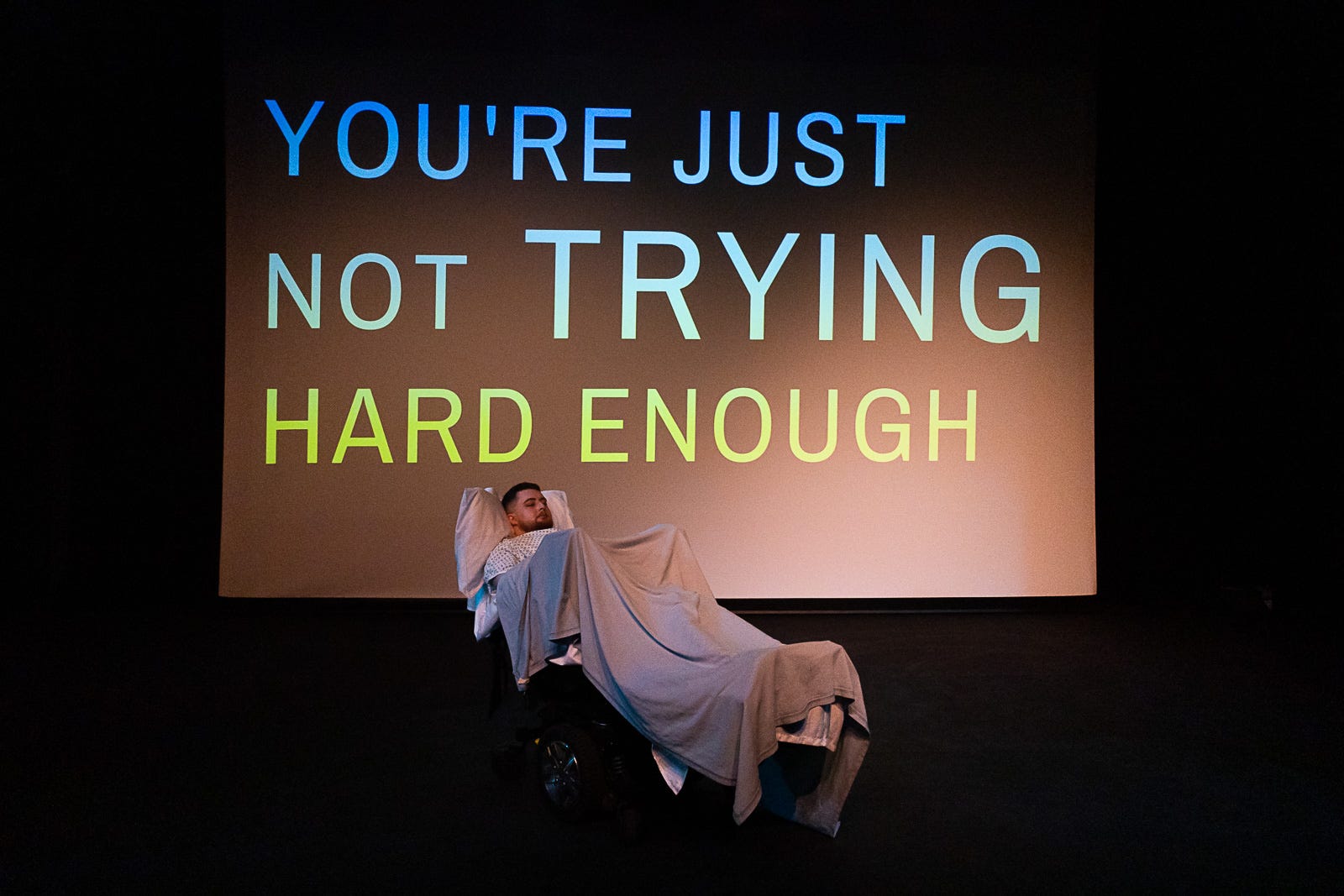
I have a busy, demanding job - I’m also disabled.
In my job, I manage the 24/7 care team for a profoundly disabled adult, including handling all recruitment, right to work paperwork, contracts, training, rotas, performances management, staffing, payroll and more. The adult cannot be left alone, and I am responsible for ensuring there is always care cover so this is not the case.
Alongside their care package, I manage their medical care. They typically have about 3 appointments per week which must be scheduled, confirmed, prepared for, attended, and followed up afterwards. I have to attend these appointments and keep records of what was discussed. I then have to ensure that everything relevant is communicated between the 6 different hospitals treating this person.
I also manage their benefits, including regular processes that confirm them as eligible, and their vehicle, requiring recertification and approval for all new drivers. In addition to all of this, I am responsible for their medical equipment, including three wheelchairs, three hoists, a specialist bed, specialist positioning equipment, two ventilators, a nebuliser, a feed pump, and more. I also have to manage their stock of approximately 30 medications, and all ancillaries including needles, syringes, pill grinders, etc, and for all their feeding tube, stoma, ventilator, nebuliser, stock, etc. One of these medications is life and death if a dose is missed, and many others could easily require hospitalisation.
There is very little room for error.
I am that disabled person. I am responsible for that person’s needs, but I am also that person myself. I have to carry out all those tasks to ensure my own needs are met. This is a caregiving job - of sorts - but it’s one I’m forced to do for myself.
It’s made impossible for us. Disabled people are expected to be twice as productive as others - to manage all our health and social care needs, and to manage employment, a family life, hobbies, and more - while existing in minds and bodies that are likely to have less functional capacity to do those things, and to require more rest.
This is a full-time job. It’s a job designed for a medical professional with strong administrative skills and the time and focus to do it properly. It was not designed for a layperson with poor organisational skills and a limited short-term memory, but I do my best to manage. It’s my job, after all.
Or is it?
This kind of labour would, in other systems, be managed by trained professionals as part of their employment. It would require someone - or a team of people - with the expertise and skillsets to carry out the labour effectively, and they would be paid for their work in doing so. When there isn’t anyone paid to take on this work, it doesn’t just vanish into the ether; it becomes the problem of overtired, overworked, unpaid disabled people already juggling a million things they need to stay alive and maintain their bodies and minds in a world not built for them.
The employment implications of this unpaid labour are huge.
Every hour I spend working on this is an hour less I have for continuing the business of my actual job. Some days I have four medical appointments, and I work in the cracks - I exist in the cracks between them. And this isn’t a second job I chose; instead it’s a second job that has been enforced on me - with no sick pay, no holiday, no time off, no colleagues, no cover, no contingency. And one where the consequences are, or could be, life or death. So I have to prioritise it over other (paid) work. This then shows my professional colleagues a version of me that could appear unreliable, because the level and quantity of work required to get me to a point where I’m at my job is so steep, and there are so many things that could go wrong on the way.
I find something ironic about the fact that I am bad at this caregiving job. And I am - not because I’m incapable, but because it doesn’t play to my strengths, and on top of that it falls into the margins of a life that already demands too much of me. This caregiving management role wasn’t designed for someone with my cognitive profile, or my fatigue, or my capacity, but nobody else can do it, so I do it anyway, playing catch-up with myself, and trying to keep plates spinning. Were it a paid role, I could also ask for support and reasonable adjustments, but there’s no similar framework for the work of managing a life as a disabled person.
The language of self-advocacy and independence hides this - it doesn’t talk much about how we’re not just navigating a difficult system; we’re operating a system on our own behalf, with limited resources, and limited time. It should be recognised, compensated work done by people with the skills to do it, but instead it is simply expected on a voluntary basis as part of what it means to be a disabled person. Doing this work is treated as personal responsibility, instead of a reflection of systemic failure. We’re doing the state’s work for free.
We need to rewrite the narrative around independence and self-advocacy. True independence isn’t forcing a disabled person to become a full-time unpaid support worker, project manager and medical administrator to survive. It looks like a system that supports us instead of offloading its structural failures onto us. Until we recognise the weight of this relentless administrative burden and see it as unpaid labour, disabled people will continue to fall through the cracks - expected to do all this work invisibly - and then to be ‘productive’ in society on top of that. Independence isn’t about doing this without help, but about setting the direction in which your life is going, with the support you need alongside you.
Next time you look at a disabled person and think we might be lazy or slow, stop and consider the unpaid labour in the background that we have to complete to survive. Because until this is counted into the work we do in society, our experiences will never be properly understood.
Reading this having arrived home from a physio appointment where my physio said, ‘Okay, you’ve been coping [with this situation] because you had to, and your body is showing me that.’ Tears in solidarity 🥲 Thank you, friend
Spot on. Thank you for writing this.