
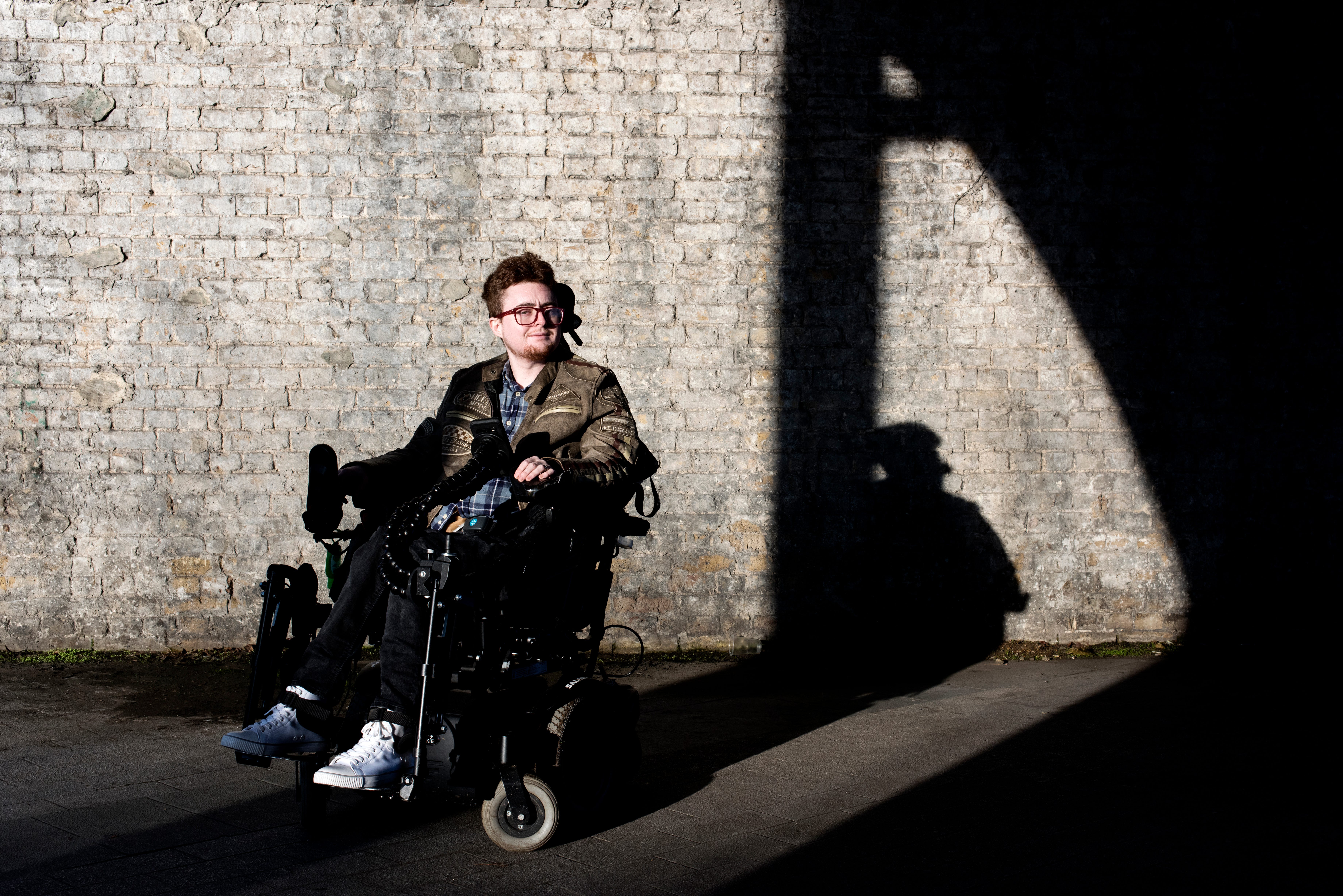
Another heatwave is coming, and I don’t feel prepared. I am not ready for the way it imbalances my bodily systems and wrecks how my medication works. I am not prepared for these crises. Nobody has mapped it out, how disabled people like me should respond.
It’s no wonder that a lot of disabled people aren’t actively involved in climate crisis and climate emergency preparedness work. We’re under threat from so many angles in the present that it’s not exactly easy to find time to look at the future, and the climate crisis is such a terrifying concept that it’s often easier to avoid it. I know I do. However the future arrived anyway, in the form of hot weather breaking all records.
It feels like every month we see more weather records being broken. Friday 26th June was the hottest June day ever recorded in the UK, potentially 37.7 degrees in Strumpshaw Hill. We’ve had 38 degrees predicted for this week.
There was an extreme heat warning, a red warning, put out by the Met Office last month, and an amber one this month. These are reserved for events expected to harm people, and not just the usual list of the “vulnerable”. Last month, the UK Health Security Agency also issued red heat health alerts in London and most of England, stating that a rise in deaths as a result of the heat was likely. There was even talk of the temperature reaching 40 degrees, though it did not.
To make matters worse, the humidity has also been very high, so sweating doesn’t effectively cool the body, and night-time temperatures were staying above 20 degrees. This meant that between one day and the next, there was no opportunity to cool down.
Sadiq Khan, the Mayor of London, essentially admitted that the city was neither built nor adapted to this weather. I don’t think I was adapted to this weather either.
Heatwaves kill people quietly - we just collect excess deaths. Apart from the obvious deaths to heatstroke, there is little to make footage or news about; it is just more people dying of things that they might otherwise have been saved from.
These deaths are predictably clustered: people over the age of 65, people with cardiovascular conditions, people with respiratory conditions, and people with dementia. They don’t say the word ‘disabled people’. This means we can’t even easily say what percentage of deaths were of disabled people, because we’ve all been counted as something else.
High heat is a disability issue because, for many disabled people, the danger of high heat affects the impairment itself. There are several ways this manifests. With multiple sclerosis, people are likely to experience their symptoms worsening during high heat as heat degrades nerve conduction across damaged myelin. With spinal cord injuries, people often have no autonomic wiring for sweating and blood flow below the level of the injury. To add to this, some cannot sweat across large areas, removing one of the main ways the body can cool itself. And many drugs, from anticholinergics to antihistamines, opioids, and psychiatric medications, can affect sweating and heat loss signals, preventing the body from effectively cooling down.
Disabled people aren’t given any extra resources or finance to help with staying cool, and yet our bodies are even less able to cool down than many others. If your body can’t regulate according to the temperature outside, you have to regulate your environment instead. In the UK, that costs money that disabled people often do not have.
Air conditioning, for example, is rare and expensive, and even running fans 24 hours a day can become very costly. Disabled households already need about £1,000 a month more for the same standard of living as non-disabled households, and don’t have money to add on fans or air conditioning.
The current situation is critical. Between 50% and 60% of people in poverty are disabled or live with a disabled person. And we already have higher energy needs for our survival, whether for powered chairs, hoists, feeding tube pumps, or ventilators. Hundreds of thousands of disabled households are already in fuel poverty, without the costs of cooling their homes being added to that.
Thinking of this from the perspective of the social model of disability, our impairments being worsened by the heat is a real problem. But compounding that is the fact that safety is too expensive for us to reach. The heat is the result of human action, but the poverty and inability to afford what would be needed to manage the heat are also the result of society’s immediate decisions. And this is killing us.
Heat is just the canary in the coalmine. Whenever you think of natural or unnatural disasters, disabled people and our needs are not taken into account. Whether it is flooding, fire, evacuation, or a power grid failure, we are the people who cannot escape down the stairs if the lift is broken, who cannot leave our houses on command, and who are dependent on power, equipment, and a care team that is ignored by disaster planning. After a disaster, we often notice that the death toll is skewed towards disabled people, but the next plan repeats the same mistakes - ignoring us.
This is partly because we are not in the rooms where these decisions are made. Disabled people are being failed by crisis management work because if we’re remembered at all, we are being planned around as a risk that needs to be managed, rather than planned with as a community that knows what it is to survive hostile environments.
Avoiding thinking about the climate crisis was a luxury I should not have had access to. It was a belief that the future was somebody else’s problem, possibly the problem of my future self but not a present problem. One of the things I realised this week is that that belief is no longer true - if it ever was.
The climate crisis isn’t something approaching from a distance the way I had imagined; it’s present in our lives, shaping us now. If disabled people don’t get involved in this, then these battles are fought over our heads and will be lost because nobody knows how to make space for our bodies.
I’m not sure I’m ready for a future in which this is normal. It’s something I’m terrified of, but I’m also fairly sure that heat doesn’t care.
Brilliantly put as always Jamie! Spent years navigating and planning for the fluctuations in body but having to navigate the fluctuations in climate and how that changes things is getting really hard, I feel like an alien version of myself. Always appreciate your thoughts ❤️
Thanks for writing about this! It’s been on my mind a lot