On Passing
As non-disabled; as neurotypical; as hearing; as cis

The concept of passing has played a key role in my life for a long time, and it’s been about passing as a range of different things - as hearing, as neurotypical, as non-disabled, as cis. This means, to me, being unmistakably read as the thing I wanted to be read as. That I would be seen as a normal person: a hearing, neurotypical, non-disabled, cis (non-trans) person.
The pressure for this was both internal - my own desires, but also external - I wanted to make myself legible as a normal person so other people were more comfortable with the way I moved through the world. I thought that I was exerting so much energy to pass to benefit myself - but I slowly came to realise that that wasn’t true.
What does passing mean to me?
Deaf
When I pass as a hearing person, I don’t need to bear the weight of trying to teach people to navigate me as a deaf person. When I can nod and smile the right amount at the right time, while getting the most important things people say down, then I don’t need to hold their discomfort and their difficulty in making me understand.
Neurodivergent
It’s holding that same discomfort that makes me want to pass as neurotypical. I know that in some ways I can be too much, that my social skills are different, that I become rigid when stressed and refuse to do anything, that my memory is so bad that across the UK there are about 7000 people with memories as bad as mine, that I know I can seem uncaring and unempathetic when I wait for people to come to me rather than remembering to address them with questions.
Disabled
Much of passing is about me feeling like I’m less work for people. I used to try and pass as non-disabled, or at least as less disabled than I am. I still do that to some extent, in a room full of people pushing my body far too far in an effort not to visibly need help, not to be a burden, not to be present.
Trans
I remember at 15, thinking about passing - passing, in my female-assigned body, as a man (or at least boy). At that time, for me, passing meant being unmistakable as the thing I identified as - and I identified fully as a boy. I knew I was born in the wrong body. All the cliches and tropes, they felt true. Now, I can’t pass as anything - I am read as a man, but I feel like that only holds part of my experience. I call myself genderqueer but haven’t found anything that truly captures how I feel about this gendered world.
What benefit do I get?
I always thought the answer to that was reasonably obvious. It allowed me to protect myself and move through the world facing less friction, spending less of my time explaining, translating, and defending myself. Passing was a form of self-preservation, and I didn’t have to justify it to anyone.
But when I think about everything passing has cost me - the energy it costs to nod, smile, and desperately try to follow a conversation, pretending to be hearing- then I can see now that I was pushing myself past what I could reasonably take so that nobody sees me needing help; I feel uncomfortable. Almost every benefit of passing is about buying something for someone else; it’s not about what I need at all.
When I pass as hearing, it saves the people around me the discomfort of changing how they speak. When I pass as neurotypical, it saves them the effort of remembering to read my responses differently. When I pass as non-disabled (or as less disabled than I am), it reduces the risk or implication of me needing anything at all, and when I pass as a cis man (which I am not), it saves them the effort of remembering my pronoun as “they”. The benefits I thought were mine - they aren’t, are they?
In some ways, passing is an unpaid labour - the emotional work of managing other people’s discomfort with my existence, disguised (even to myself) as looking after my own interests. It’s not.
The different types of passing
But it isn’t all the same either. Once I started to unpack this, the different kinds of passing started to come apart, because they’re not one thing.
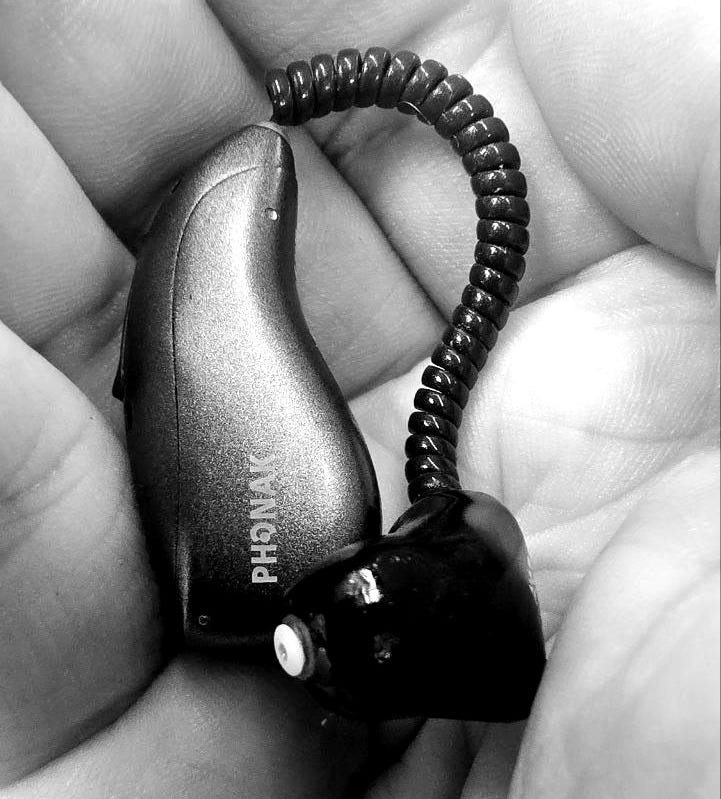
Some of it was unchosen - despite my black hearing aids against white skin, they are usually missed, and I am read as hearing whether I want to be or not. The labour comes in managing to keep up with that assumption. Some of it was chosen - my attempts to mask my rigidity, to hide how poor my memory is - because I worry about what people would think and do - and some of it was lost - I used to be able to pass as non-disabled, but cannot do that any more.
And the trans passing has done something stranger. At fifteen, passing was my whole world; I was a man, clear and simple, and I wanted to be unmistakable that way. I was born in the wrong body - tropes and all - and just needed that fixing. Now I am read as a man with no effort, and pass unbidden and easily - but that only holds part of me. I can’t pass as being neither man nor woman because there is nothing there for me to pass as.
What passing hides
I’ve found this hardest and slowest to admit. Passing doesn’t only cost me energy to comfort others; it hides things - from them, but also from myself.
The deaf self I work so hard not to make anyone accommodate is also a self I have never learned to truly inhabit. The neurodivergent traits I hide - the severity of my memory loss, the rigidity under stress - these have always been treated as faults for me to conceal, rather than facts that can be accommodated. And by trying to pass as non-disabled, I have slowly taught myself that I believe it’s better to be non-disabled than disabled.
Being understood and known
So there’s a kind of gift inside the way I’ve been closed out of passing as non-disabled now. I can no longer perform it however hard I push, and you learn who you actually are when you can no longer manage how you are read. Yes, it’s a real loss, but it also allowed me to start telling the truth about what I need, and to take up space.
While passing, let me have one thing - a category into which you easily fit - it cuts me out of another thing - being known by the people around me. When people know me as genderqueer rather than as a man, when they recognise the history of female socialisation that I experienced as being as much a part of my gender as my beard is, then they see me, and they know me. I thought I was known when I had created a self that cleanly fit their categories, but actually I am only seen and known when I inhabit my own categories authentically.
I don’t have a tidy place for these thoughts to end - I still pass at times, because that’s easier for me, but I’m starting to learn to assert who I am, and to trust that the people around me want to know me in my authenticity, rather than in their imagined idea of what my self might be.
I really enjoyed this article.
Thank you
I also pass as hearing. I often wonder does anyone else who passes as hearing also wonder if those with working ears know how to listen?