Shared Struggles: Trans and Disabled Communities
Disabled and trans people share a refusal to allow us to define our own experiences. We are all defined first and foremost in medical terminology designed to break us down and categorise us.

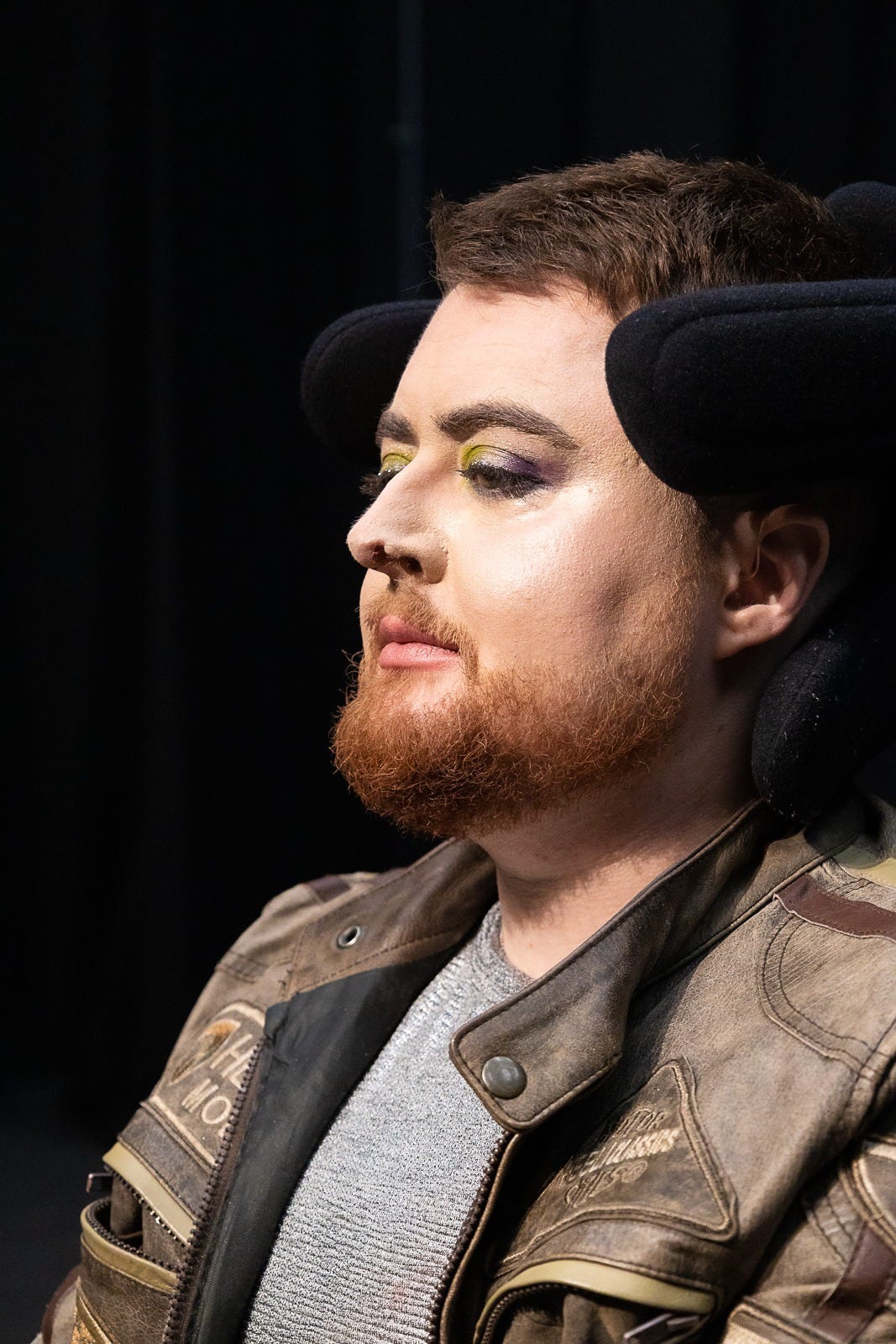
Some people sometimes joke that the Venn diagram between trans people and disabled people is almost a circle. I would dispute that, but certainly there’s a huge overlap; I know very few trans people who aren’t also disabled, even if I know more disabled people who aren’t trans.
And as disabled people and trans people we share similar battles - for bodily autonomy over medicalisation, for the right to define ourselves and our experiences, against a current political climate that seems intent on taking our rights.
As a trans person and as a disabled person, I do not wish to be defined by the medical processes enacted (or not enacted) on my body, but to be heard and believed when I define my own experience in ways that speak to me. As a disabled person, this means not being defined by my impairment, my underlying condition and the medical language that oppresses me, but by the labels I’ve chosen to claim - disabled, for example. And as a trans person, this means not being defined by my status as a trans person, or the medical procedures I have or haven’t had, and being accepted as genderqueer, or as a man, because I say I am, not because I meet a set of arbitrary medical criteria that grant me access to that box.
The social model of disability has a lot to offer trans people. It relocates the suffering trans people face from the body to the world - impairment being the bodily fact, disability being what an inaccessible society does on top of that. If we think of being trans as the fact, so much that shapes the distress and challenges of the trans experience isn’t inherent to being trans; it’s what a transphobic society does to us. If we see being trans as a fixed fact about ourselves, the barriers that create distress and exclusion are socially created - sex segregated facilities, binary documents, single sex hospital wards, and the expectation that trans people have to pass as one gender or ‘the’ other.
It doesn’t fit perfectly - just as the social model isn’t perfect - impairment effects are a core part of the disabled experience, and even in a fully affirming world, many trans people would still experience negative effects such as bodily dysphoria. However, it recognises how the barriers we face are socially created, and hopefully finds some degree of solidarity between two communities facing great barriers, with a significant overlap.
Disabled and trans people share a refusal to allow us to define our own experiences. We are all defined first and foremost in medical terminology designed to break us down and categorise us, and it is only through activism that we find ways of claiming our own language. The depathologisation movement of trans people in some ways distances them from disabled people - who remain linguistically pathologised - but the shared expectation of submission to medical authority causes harm to both communities.
And the current political climate? It’s attacking lots of groups of people - and two of those groups are disabled people and trans people. I don’t pretend that we’re attacked more than other groups, but we do need support and solidarity in fighting back, and maybe the commonalities between our communities could empower us to collaborate on that process of fighting back. From cuts to the Motability Scheme, to Access to Work, to proposed Personal Independence Payments cuts, to changes to how the Limited Capacity for Work-Related Activity element of Universal Credit is handled, to the impossibility of accessing an EHCP, disabled people are fighting on so many fronts that how could we focus anywhere? And at the same time, trans people are fighting Equality and Human Rights Commission guidance that would force us to use the toilets of our biological sex, or non-gendered toilets - a rolling back of rights unlike anything I’ve ever seen.
Disabled people are used to fighting over toilets - we fought for adapted toilets, and we fought for them being of a decent quality and size, and we’re fighting for Changing Places toilets now. What can we do to support trans people? And what can trans people do to support us, on all the fronts we’re battling? And for those of us who are both, how do we avoid being spread too thin, with battles on every front? We avoid this by looking for and receiving solidarity, both from others on the front lines and from people who are less affected.
What impact do these commonalities have? And how could we come together more? None of these battles is easy, but none of these battles is lost. Here are a few easy things you can do straight away:
Whether you know there will be trans and/or disabled people at an event you’re setting up, make sure you only consider venues that have wheelchair access, adapted toilets, and gender neutral toilets. Work with your workplace and any other venues you come across to ensure that there are single-stall toilets open to people of any gender, and while you’re doing so, make sure that they’ve also got at least one gender-neutral adapted toilet.
If you’re rejecting a venue for not having an adapted toilet or gender neutral toilets, tell them, to remind them of the business case for putting these things in place.
When you ask questions about access and toilets, ask for them together, in the same email. They’re two sides of the same coin (”which bodies do we allow into space and which do we refuse”).
Act in solidarity whether or not we’re there. Fight for trans and disabled people in your workplace meetings, your social circles, your online platforms, whether we’re there or not. People will often say far worse things when we aren’t there, expecting not to be challenged, so challenge them.
Do the boring work responding to surveys and government consultations about our rights, giving your position and backing up what we’re saying.
And if you can think of anything else you could do - go out there and do it (and write it in the comments)!